

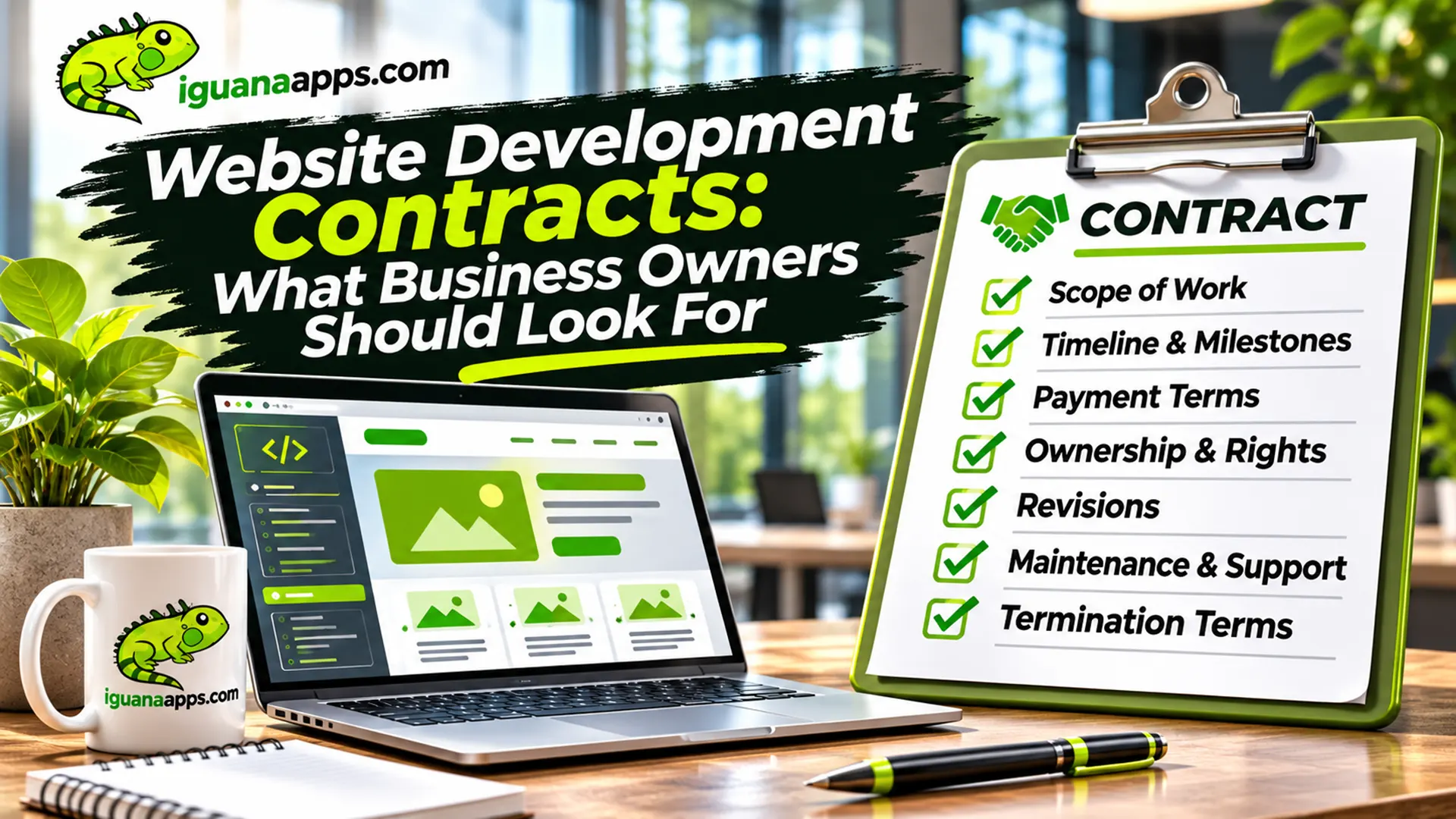
Before a web development project begins, there should be a clear understanding between the business and the developer.
That understanding is often documented in a contract or agreement.
A good development contract doesn’t need to be intimidating.
Its purpose is to make expectations clear for everyone involved.
Here are some important areas business owners should understand before signing.
- Project Scope
The contract should explain what is being developed.
Depending on the project, this could include:
- Pages
- Features
- Forms
- E-commerce
- Integrations
- Custom applications
- Content
- Design
A vague scope can create disagreements later.
- Deliverables
The agreement should identify what you’ll receive.
For example:
- Website
- Design files
- Source code
- Database
- Documentation
- Training
- Other digital assets
Make sure you understand the deliverables.
- Project Timeline
The agreement should provide a reasonable timeline or describe how scheduling will work.
Remember that timelines can depend on both the developer and the client.
Content delays, feedback delays, scope changes, and third-party services can all affect a project.
- Payment Terms
Understand:
- Total project cost
- Deposit
- Payment schedule
- Accepted payment methods
- Additional charges
- Taxes where applicable
Avoid surprises by discussing payment terms before work begins.
- Change Requests
Projects sometimes change.
You may decide you want a new feature halfway through development.
The contract should explain how additional work is handled.
For example, changes may require:
- A new estimate
- Written approval
- Additional payment
- Timeline adjustments
- Ownership
One of the most important questions is who owns the finished work.
The agreement should clarify ownership or licensing of:
- Website code
- Content
- Images
- Designs
- Databases
- Custom software
Don’t assume. Read the agreement.
- Domain Name
Your business should understand who controls the domain name.
The domain is an important business asset.
Make sure you know:
- Who registered it
- Who controls the account
- How it can be transferred
- When it expires
- Hosting
Clarify where the website will be hosted and who controls the hosting account.
Ask about:
- Hosting costs
- Renewal fees
- Performance
- Backups
- Server management
- Migration options
- Maintenance
Websites need maintenance.
The contract should clarify whether maintenance is included.
This may include:
- Updates
- Security fixes
- Backups
- Monitoring
- Content changes
- Technical support
- Third-Party Services
Some websites depend on external services.
Examples include:
- Payment processors
- Email services
- Scheduling platforms
- Hosting providers
- Software subscriptions
Understand which services have ongoing fees and who is responsible for them.
- Termination
It’s also useful to understand what happens if either party needs to end the relationship.
The contract may address:
- Notice
- Outstanding payments
- Transfer of files
- Domain access
- Hosting access
- Source code
- Data
This doesn’t mean you expect the relationship to end.
It simply creates a clear process if circumstances change.
- Support After Launch
Ask how support works after the website launches.
Is there a warranty period?
Are bugs fixed without additional charges?
How are new features handled?
Knowing the answers ahead of time can prevent confusion later.
Read Before Signing
Don’t sign a contract you don’t understand.
If a clause is unclear, ask the developer to explain it.
For complicated legal matters, consider consulting a qualified attorney.
A Good Contract Protects Both Sides
A development agreement isn’t simply about protecting the developer.
It can also protect the business by clearly defining:
- What will be delivered
- What it will cost
- When it will happen
- Who owns what
- What happens when requirements change
Clear expectations create better working relationships.
Choose a Developer Who Values Transparency
At Iguana Technologies, we believe clients should understand the project they’re investing in.
We work with businesses to define project requirements, functionality, costs, and expectations before development begins.
Whether you need a business website, e-commerce platform, custom application, or integration, clear communication is part of the development process.
Planning a web development project? Contact us at Iguana Technologies to discuss your requirements and next steps.
Contact us
Get a FREE, NO OBLIGATION consultation appointment any time, by filling out the form below!
