

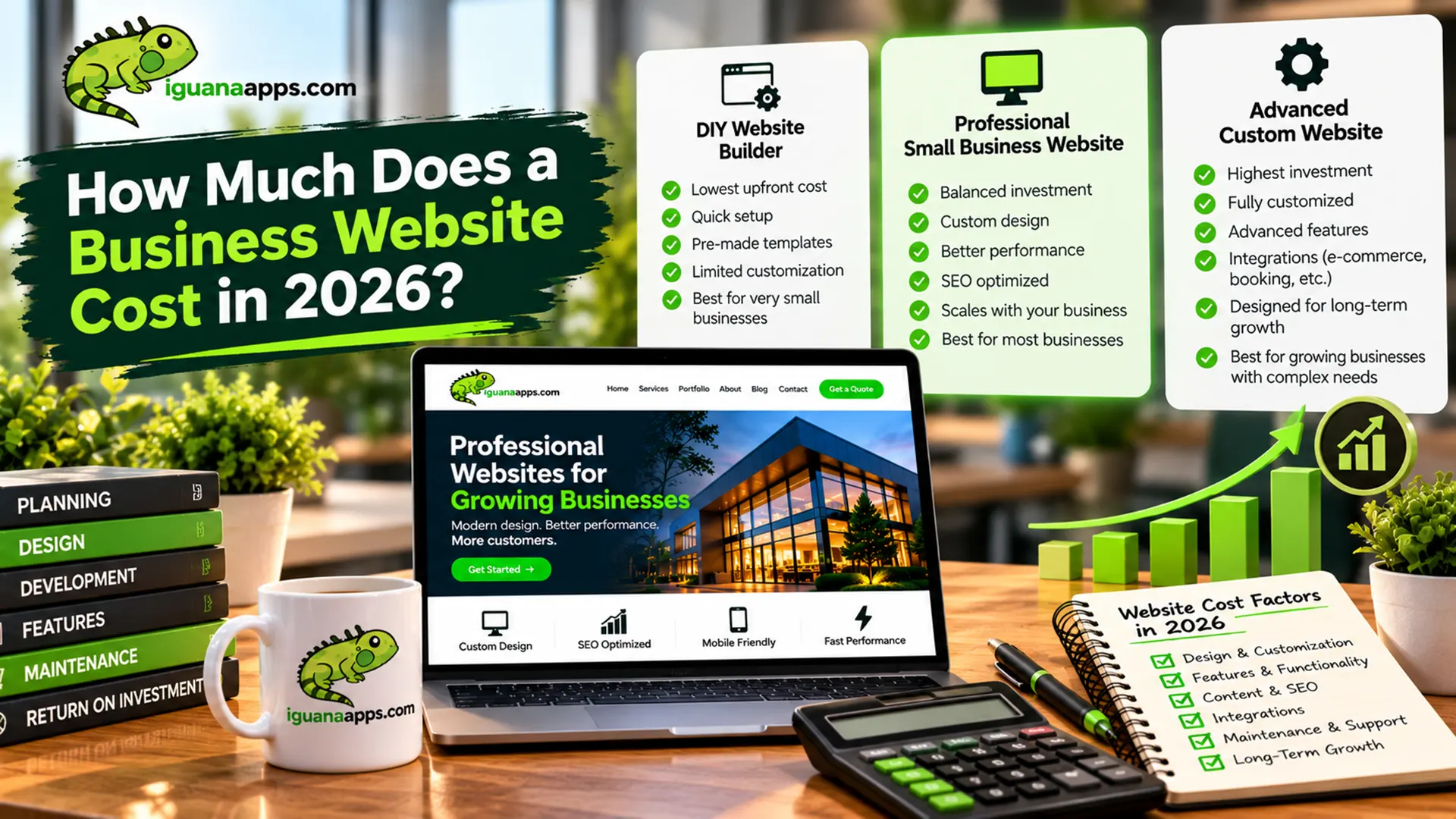
If you’re considering building a website for your business, one of the first questions you’re probably asking is: How much does a business website cost?
The honest answer is that there isn’t one price that applies to every business.
A simple informational website and a custom e-commerce platform have very different requirements. The cost can depend on the number of pages, design requirements, functionality, integrations, content, SEO, maintenance, and the level of customization you need.
Understanding these factors can help you make a better decision and avoid paying for features your business doesn’t actually need.
What Determines the Cost of a Business Website?
Several factors influence the overall cost of website development.
- Website Design
A professionally designed website typically requires more planning than simply selecting a template.
Your developer may need to create:
- A custom layout
- Brand-specific colors and typography
- Mobile-friendly designs
- Custom graphics
- User-friendly navigation
- Calls-to-action
- Landing pages
- Conversion-focused page layouts
The more customized the design, the more development work may be required.
- Number of Pages
A five-page website is naturally different from a website with dozens or hundreds of pages.
A typical small-business website might include:
- Home
- About
- Services
- Portfolio or Projects
- Contact
Additional pages could include individual service pages, locations, resources, FAQs, blog articles, team profiles, or landing pages.
- Website Functionality
Functionality is another major factor.
A basic informational website may only need text, images, forms, and navigation.
A more advanced website might require:
- Online payments
- Customer accounts
- Appointment scheduling
- E-commerce
- Membership systems
- Product catalogs
- Online forms
- Custom calculators
- Third-party integrations
- Customer portals
- Automated workflows
The more functionality your website needs, the more development and testing it generally requires.
What About E-Commerce Websites?
Online stores typically require more development than informational websites.
An e-commerce website may need:
- Product management
- Shopping carts
- Checkout
- Payment processing
- Shipping calculations
- Tax calculations
- Customer accounts
- Order management
- Inventory management
- Discount codes
- Email notifications
- Security features
Because of these additional requirements, e-commerce projects should be planned around the business’s actual sales process rather than simply choosing a template and adding products.
Don’t Forget Mobile Devices
A modern business website needs to work well on phones, tablets, laptops, and desktop computers.
Responsive design allows the website layout to adapt to different screen sizes.
This isn’t just about appearance. Navigation, buttons, forms, images, text, and other interactive elements all need to remain usable on smaller screens.
What About SEO?
Search engine optimization can also be part of website development.
A website can be technically functional but still difficult for search engines and potential customers to discover.
A strong website foundation can include:
- Search-friendly page structure
- Descriptive page titles
- Meta descriptions
- Proper heading structure
- Fast loading times
- Mobile-friendly design
- Accessible content
- Search-engine-friendly URLs
- Structured internal linking
SEO is an ongoing process, but building a strong technical foundation during development can make future optimization easier.
Website Development Isn’t the Only Cost
When budgeting for a website, remember that development is only one part of the overall investment.
Depending on your project, you may also need to consider:
- Domain registration
- Web hosting
- Professional photography
- Copywriting
- Logo or branding
- SEO
- Ongoing maintenance
- Security monitoring
- Software subscriptions
- Third-party services
Some businesses need all of these services, while others only need a few.
Should You Choose the Cheapest Website Option?
Price is important, but it shouldn’t be the only consideration.
A website represents your business to potential customers. If the website is difficult to use, slow, outdated, confusing, or doesn’t work properly on mobile devices, the cheapest initial option may become expensive in the long run.
Instead of asking only, “What’s the cheapest website I can get?” consider asking:
“What does my business actually need its website to accomplish?”
That question can help determine the right level of investment.
How Much Should You Budget?
The right budget depends on your business and the complexity of the project.
A small informational website may have very different requirements from a large e-commerce store or custom web application.
The best way to establish a realistic budget is to define:
- What the website needs to accomplish
- Who will use it
- What functionality is required
- How many pages are needed
- What integrations are necessary
- What content already exists
- What future growth should be supported
Once these requirements are clear, a developer can provide a much more meaningful estimate.
Build a Website Around Your Business
At Iguana Technologies, we believe a website should be more than an online business card.
Your website should support your business goals, communicate your value clearly, provide a good experience for customers, and give your business room to grow.
Whether you need a new business website, an e-commerce store, or a more customized web solution, the first step is understanding what you actually need.
Ready to Build Your Business Website?
If you’re planning a new website or considering replacing an existing one, Iguana Technologies can help you evaluate your requirements and determine an appropriate approach.
Contact us
Get a FREE, NO OBLIGATION consultation appointment any time, by filling out the form below!
