

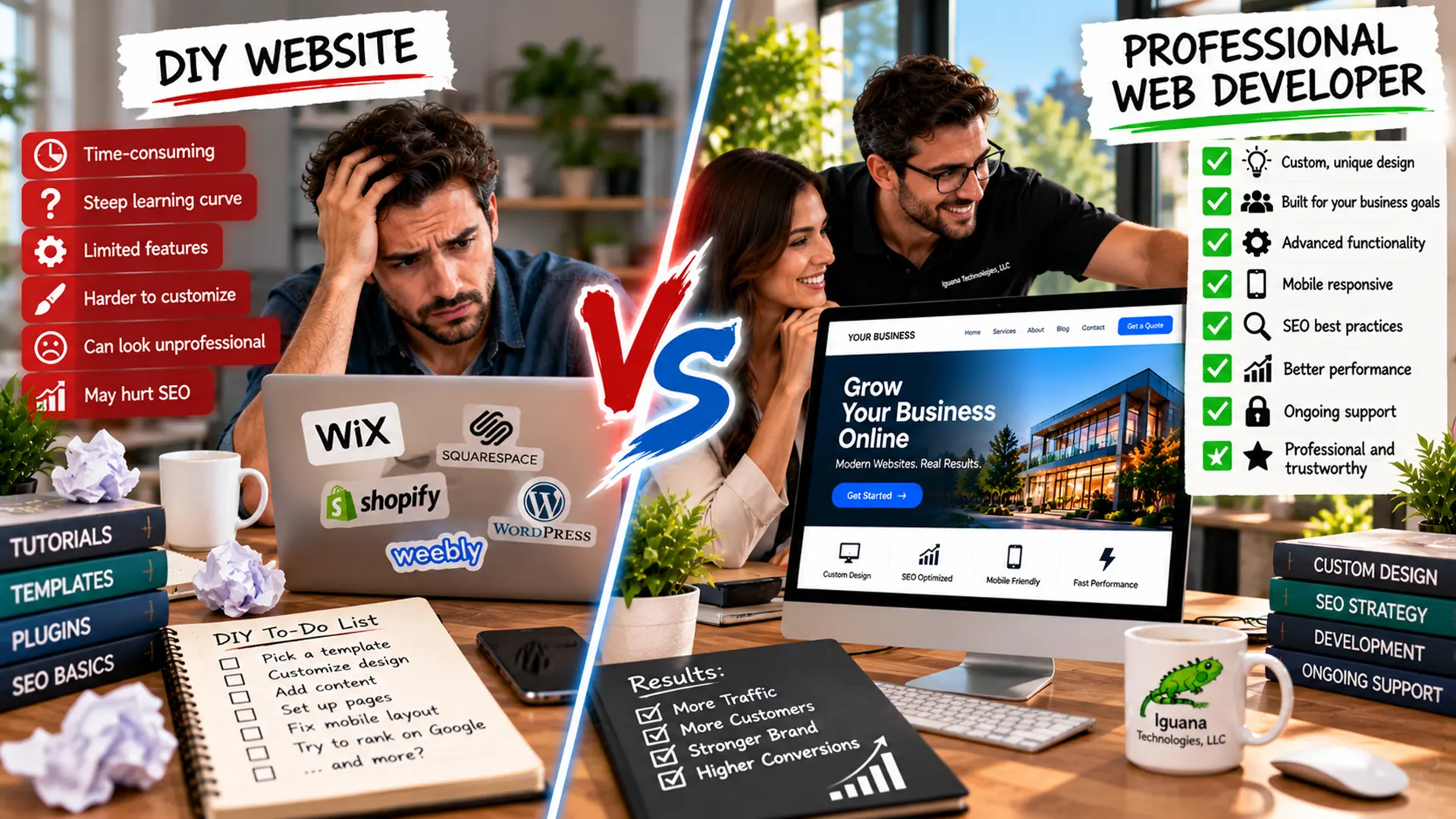
Today, almost anyone can build a website.
Website builders, templates, and online tools have made it possible for business owners to create a basic website without hiring a developer.
But that doesn’t necessarily mean doing it yourself is the best option for every business.
The right choice depends on your budget, technical skills, available time, and what you need your website to accomplish.
What Does a DIY Website Involve?
A DIY website generally means that the business owner or an employee handles most of the website creation process.
This may include:
- Choosing a platform
- Selecting a template
- Creating pages
- Writing content
- Adding images
- Configuring forms
- Setting up a domain
- Managing updates
Modern website builders can make these tasks relatively accessible.
Advantages of Building Your Own Website
Lower Initial Cost
One of the biggest advantages is potentially lower upfront expense.
Many platforms offer affordable plans and templates.
Direct Control
You control the website and can make changes whenever you want.
Fast Setup
For a simple website, a business owner may be able to publish something relatively quickly.
Learning Opportunity
Building your own website can help you learn more about your online presence and digital tools.
The Potential Downsides
DIY development also has tradeoffs.
Time
Learning the platform, creating content, editing images, fixing problems, and maintaining the website can consume significant time.
For a business owner, that time has an opportunity cost.
Design
A template can provide a good starting point, but creating a polished and consistent user experience requires more than choosing attractive colors.
Technical Issues
Businesses may eventually encounter:
- Broken forms
- Performance problems
- Plugin conflicts
- Mobile layout issues
- Integration problems
- Security concerns
Solving these problems can be difficult without technical experience.
SEO
A website can exist online without being easy for potential customers to discover.
Search engine optimization involves technical structure, content, performance, local signals, and ongoing work.
Custom Functionality
If your business requires functionality that isn’t included in your platform, you may eventually reach its limitations.
What Does a Professional Developer Provide?
A professional web developer can handle much of the technical work involved in building and maintaining a website.
Depending on the project, that can include:
- Planning
- UX design
- UI design
- Development
- Responsive layouts
- Integrations
- E-commerce
- Performance optimization
- SEO foundations
- Security
- Testing
- Deployment
- Maintenance
What About Cost?
Hiring a professional generally requires a larger upfront investment than building a basic website yourself.
But the comparison shouldn’t be limited to the initial price.
Consider the total value of:
- Your time
- Technical expertise
- Website quality
- Functionality
- Performance
- Customer experience
- Future scalability
- Ongoing support
A DIY website can be a sensible choice for certain situations.
A professional website may make more sense when your website is an important part of generating revenue.
When DIY May Make Sense
Consider building the website yourself if:
- Your requirements are simple
- Your budget is very limited
- You have the time to learn
- You don’t need custom functionality
- You’re comfortable managing the website
When Hiring a Developer May Make Sense
Consider professional development if:
- Your website generates leads
- Your business sells online
- You need custom functionality
- You need integrations
- Your website has technical problems
- You don’t have time to manage development
- You need a professional redesign
- Your website is important to your business operations
There’s No One-Size-Fits-All Answer
A small business doesn’t automatically need an expensive custom website.
Likewise, a growing business shouldn’t assume that a basic template will meet its needs indefinitely.
The best approach is the one that matches your actual requirements.
Think About Your Business Goals First
Before choosing a platform or developer, make a list of what you need your website to accomplish.
Then determine what technology and level of development are appropriate.
At Iguana Technologies, we help businesses evaluate those requirements and develop practical web solutions around them.
Considering a New Website?
Whether you’re starting from scratch, replacing a DIY website, or improving an existing site, we’re happy to discuss your goals.
Contact us at Iguana Technologies to talk about your website project.
Contact us
Get a FREE, NO OBLIGATION consultation appointment any time, by filling out the form below!
