

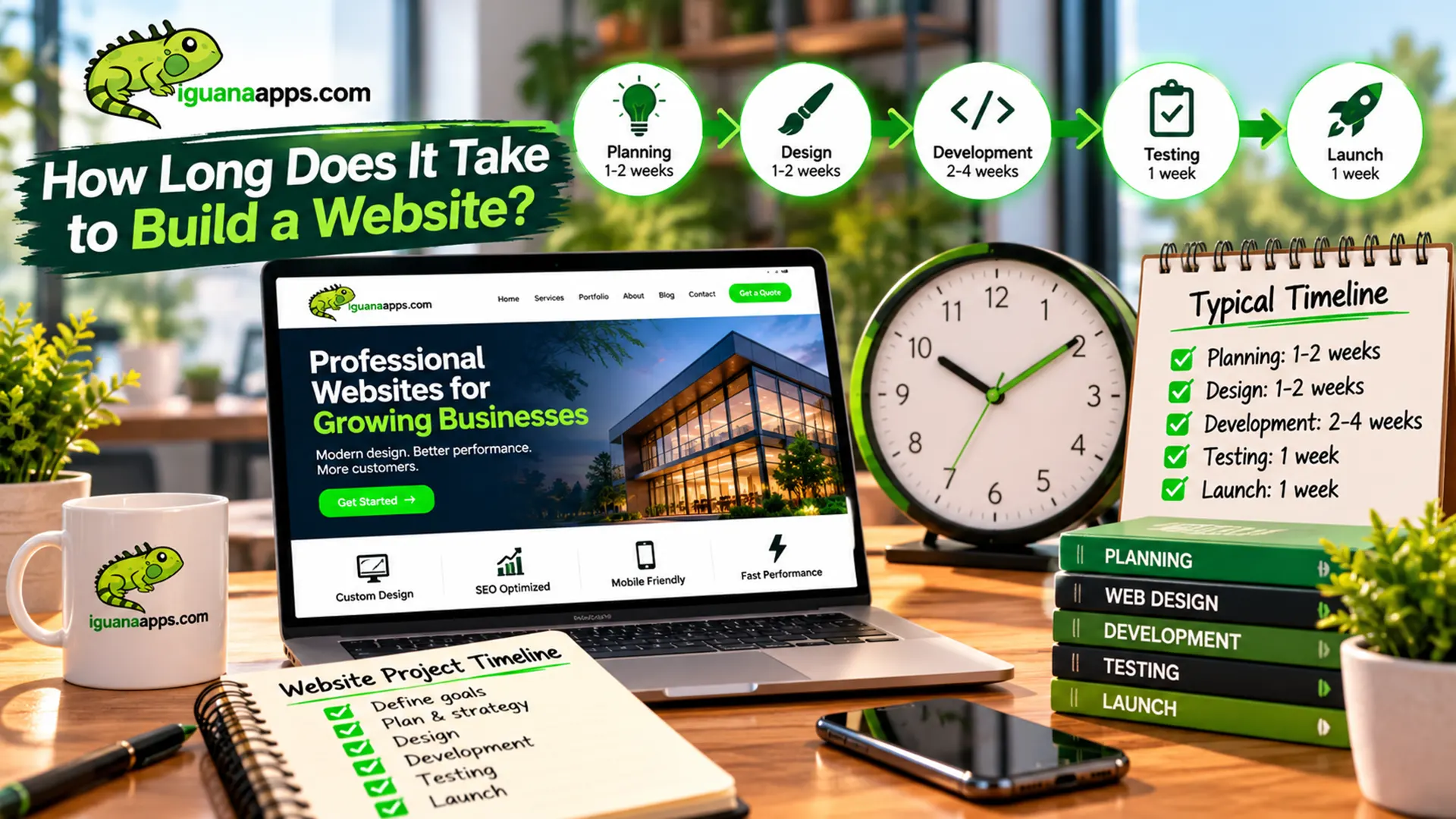
One of the first questions businesses ask when starting a website project is:
“How long will it take?”
There isn’t one timeline that applies to every website.
A simple business website may require significantly less development than an e-commerce platform or custom web application.
The timeline depends on the project’s scope, content, design, functionality, feedback process, and technical requirements.
What Determines a Website’s Timeline?
Several factors can affect how long a website takes to build.
- Project Size
A small website with a handful of pages is generally simpler than a large website with dozens of pages and complex functionality.
The number of pages, templates, features, and integrations all affect the amount of work involved.
- Design Requirements
A website needs more than code.
The design process may include:
- Page layouts
- Navigation
- Typography
- Branding
- Images
- Buttons
- Forms
- Mobile layouts
- User experience
Custom designs generally require more planning than adapting an existing template.
- Content
Content is one of the most common factors that can affect a project timeline.
A website may require:
- Written copy
- Product descriptions
- Photographs
- Videos
- Team information
- Service descriptions
- FAQs
- Case studies
If content isn’t ready when development begins, the project may need to pause while content is created or approved.
- Features and Functionality
A basic website might only need pages, navigation, forms, and contact information.
More advanced websites may require:
- Online payments
- E-commerce
- Customer accounts
- Appointment scheduling
- Memberships
- Custom forms
- API integrations
- Databases
- Customer portals
- Automated workflows
Every additional feature can add design, development, testing, and troubleshooting requirements.
- Feedback and Approvals
Website development is collaborative.
Clients typically need to review designs, provide content, answer questions, and approve completed work.
Fast feedback can help keep a project moving.
Long approval cycles can extend the timeline even when development work itself is progressing normally.
- Integrations
If your website needs to communicate with other systems, additional development and testing may be required.
For example, a website might connect with:
- Payment providers
- CRM systems
- Accounting software
- Inventory systems
- Email marketing platforms
- Scheduling systems
- Customer databases
The complexity of those integrations can significantly influence the timeline.
- Testing
Before a website launches, it should be tested.
Testing may include:
- Mobile devices
- Desktop browsers
- Forms
- Links
- Navigation
- Payments
- User accounts
- Integrations
- Page performance
- Security-related functionality
A website launch shouldn’t be rushed simply to meet an arbitrary date.
A Typical Website Development Process
While every project is different, a professional website project often follows a process similar to this:
Step 1: Discovery
The project begins by understanding the business, customers, goals, content, functionality, and technical requirements.
Step 2: Planning
The website structure, pages, features, and technology are planned.
Step 3: Design
The visual design and user experience are developed.
Step 4: Development
The approved design is turned into a working website.
Step 5: Content
Text, images, products, and other content are added and organized.
Step 6: Testing
The website is tested across relevant devices, browsers, and functionality.
Step 7: Launch
Once everything is approved and ready, the website is deployed.
Step 8: Maintenance
After launch, the website may require updates, security monitoring, backups, improvements, and new content.
Why You Shouldn’t Rush a Website Project
Getting a website online quickly can be useful, but speed shouldn’t come at the expense of quality.
A rushed website can result in:
- Broken functionality
- Poor mobile usability
- Incomplete content
- Technical problems
- Weak SEO foundations
- Confusing navigation
- Missed opportunities
The goal shouldn’t simply be to launch a website.
The goal should be to launch a website that is ready to serve your customers.
How Can You Help Your Website Launch Faster?
Businesses can often help keep a project moving by preparing:
- Company information
- Branding
- Images
- Written content
- Product information
- Contact details
- Business hours
- Service descriptions
- Login credentials for required services
- Feedback and approvals
The more prepared these materials are, the fewer delays there may be during development.
Start With the Right Plan
A website timeline should be based on the actual requirements of the project.
At Iguana Technologies, we work with businesses to understand their goals, determine the required functionality, and develop a plan for moving the project forward.
Whether you’re building your first business website, redesigning an existing site, or developing something more advanced, proper planning can make the process much smoother.
Planning a New Website?
Let’s talk about what you need your website to accomplish.
Contact us
Get a FREE, NO OBLIGATION consultation appointment any time, by filling out the form below!
