

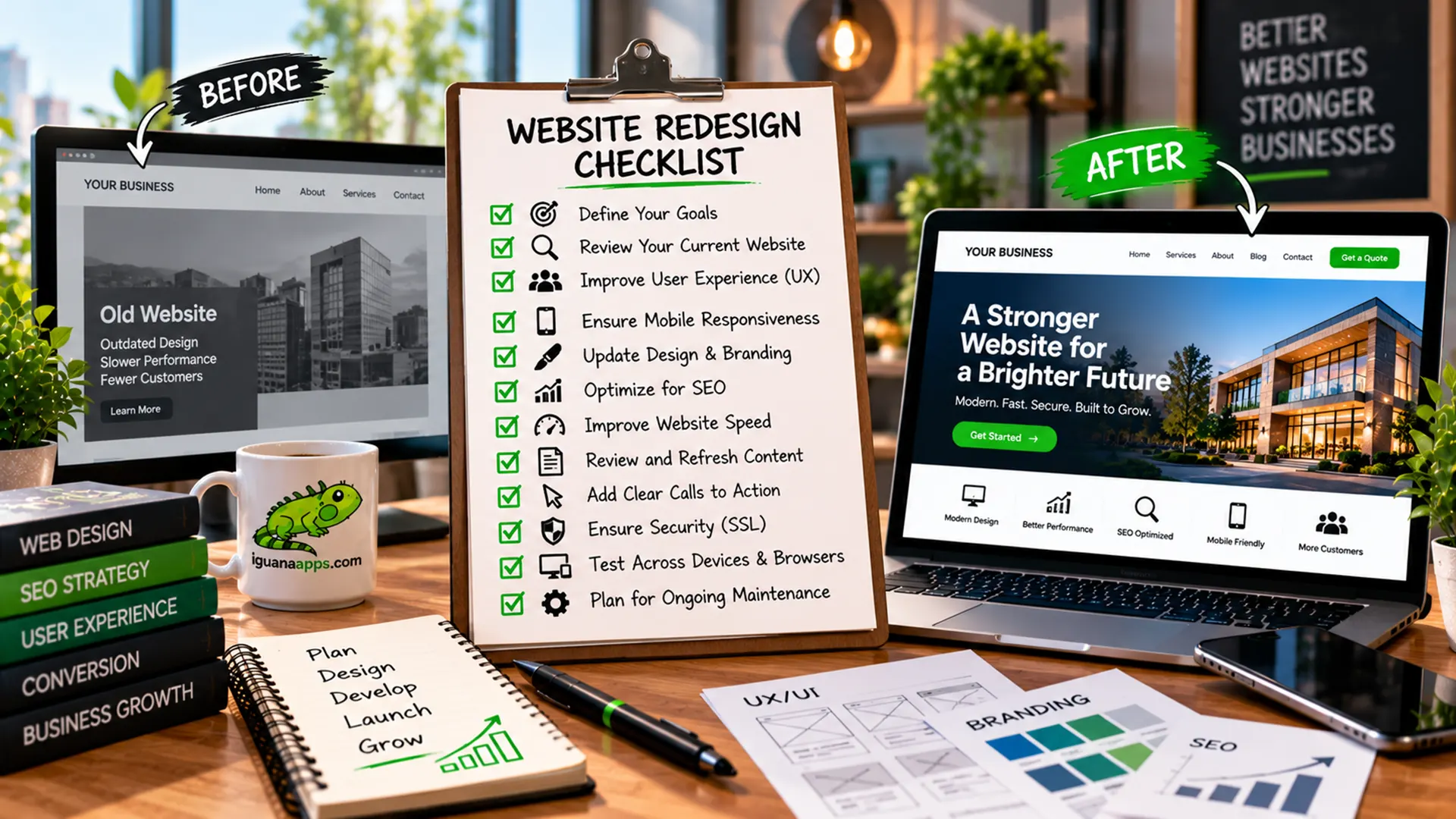
Redesigning a business website can be exciting, but it can also become overwhelming quickly.
There are dozens of decisions involved—from design and content to SEO, security, mobile responsiveness, forms, analytics, and more.
The easiest way to keep a redesign organized is to use a checklist.
Before your new website launches, make sure you’ve considered these important areas.
- Define Your Goals
Start by identifying why you’re redesigning the website.
Are you trying to:
- Generate more leads?
- Increase online sales?
- Improve your company’s credibility?
- Improve mobile usability?
- Increase search visibility?
- Make the website easier to manage?
- Add new functionality?
- Improve website speed?
Your goals should influence every other decision during the project.
- Identify Your Target Customers
Your website shouldn’t be designed for everyone.
Identify the people you’re trying to reach.
Consider:
- Who are your ideal customers?
- What problems are they trying to solve?
- What information do they need?
- What questions do they commonly ask?
- What would prevent them from contacting you?
Understanding your audience makes it easier to create useful content and intuitive navigation.
- Review Your Existing Website
Before removing anything, evaluate your current website.
Identify:
- High-performing pages
- Popular content
- Important landing pages
- Existing backlinks
- Pages generating leads
- Outdated information
- Broken links
- Unnecessary pages
Some pages may need to be improved rather than removed.
- Plan Your Website Structure
Create a logical structure for the new website.
Typical business websites may include:
- Home
- About
- Services
- Products
- Contact
- Frequently Asked Questions
- Blog
- Locations
Larger websites may need additional categories and subpages.
The goal is to make information easy to find.
- Rewrite Your Content
A redesign is an excellent opportunity to improve your messaging.
Make sure every major page clearly explains:
- What you offer
- Who you serve
- Why customers should choose you
- What action visitors should take next
Avoid filling pages with unnecessary marketing language.
Clear communication is usually more effective.
- Update Your Visual Branding
Review your:
- Logo
- Colors
- Fonts
- Photography
- Icons
- Graphics
- Buttons
- Overall visual style
Your website should provide a consistent experience with your other marketing materials.
- Make the Website Mobile-Friendly
Test the new design on phones and tablets.
Check:
- Navigation
- Text size
- Buttons
- Forms
- Images
- Menus
- Page layouts
- Checkout processes
A website that looks great on a desktop computer can still provide a poor mobile experience.
- Improve Website Speed
Optimize:
- Images
- Code
- Fonts
- Scripts
- Hosting
- Caching
- Third-party integrations
Performance should be considered during development rather than treated as an afterthought.
- Protect Your SEO
A redesign can unintentionally damage search visibility if old URLs disappear without proper planning.
Before launching, identify important existing URLs and determine whether they will remain the same or require redirects.
Also review:
- Page titles
- Meta descriptions
- Headings
- Internal links
- Sitemap
- Structured data
- Image alt text
- Check Forms and Calls-to-Action
Every important form should be tested.
Make sure submissions actually reach the appropriate person.
Test:
- Contact forms
- Quote forms
- Newsletter forms
- Appointment requests
- Account registration
- Checkout
- Phone links
- Email links
Don’t assume something works just because it looks correct.
- Review Security
Before launch, make sure your website has appropriate security measures in place.
Depending on your website, this may include:
- HTTPS
- Secure authentication
- Software updates
- Access controls
- Backups
- Security monitoring
Security should be part of the project from the beginning.
- Install Analytics
Make sure you can measure what happens after launch.
Analytics can help you understand:
- Where visitors come from
- Which pages they visit
- What actions they take
- Where they leave
- Which marketing channels perform well
Without measurement, it becomes much harder to improve your website.
- Test Everything
Before launch, test the website on multiple:
- Browsers
- Phones
- Tablets
- Desktop computers
- Screen sizes
Check every important link, button, form, menu, and interactive feature.
- Create a Launch Plan
Don’t simply publish the new website and hope everything works.
Have a launch checklist covering:
- DNS
- Hosting
- SSL
- Redirects
- Forms
- Analytics
- Search engine tools
- Backups
- Contact information
- Final content review
- Plan for After Launch
A website redesign isn’t finished the day the site goes live.
Your website needs ongoing:
- Updates
- Security maintenance
- Content improvements
- Performance monitoring
- Backups
- SEO work
- Feature improvements
A website should continue evolving as your business grows.
The Complete Website Redesign Checklist
Before launching, ask:
☐ Are our goals clearly defined?
☐ Is our target audience clearly identified?
☐ Is the navigation easy to understand?
☐ Is the content current?
☐ Does the design represent our brand?
☐ Does the website work well on mobile devices?
☐ Is the website fast?
☐ Have important SEO elements been preserved?
☐ Have redirects been planned?
☐ Do all forms work?
☐ Are calls-to-action clear?
☐ Has the website been tested?
☐ Are analytics installed?
☐ Are backups configured?
☐ Is the website secure?
☐ Do we have a post-launch maintenance plan?
If you can confidently answer yes to these questions, you’re much better prepared for launch.
Need Help With Your Website Redesign?
Iguana Technologies can help businesses plan, design, develop, and launch modern websites built around their goals.
If you’re considering a redesign, contact us to discuss your existing website and what you’d like to improve.
Contact us
Get a FREE, NO OBLIGATION consultation appointment any time, by filling out the form below!
